Suicide Awareness, it’s for everyone to know the signs
You have heard the stories on the news, all over social media and through shared views on the internet. Everyone wondering why a child that life has so much more to live would choose to end their young life. The parents are in disbelief as to why their child didn’t come talk to them, teachers talk about how they notice a change in the child but never took the time to check on them or the friends who say “ I just talked to them and they were fine”. Depression present differently in each individual and children are not different in this aspect. Do you know the signs of depression or a person that is contemplating suicide? This blog will keep you aware of the signs of suicide and provide education on the “Zero Suicide” framework that works to create how to deal with individuals with suicidal thoughts safely.
Over the last 15 years I have worked in child and adolescent psychiatry as a psychiatric nurse, I have met some phenomenal patients that just want someone that will care or listen. In our busy lives of constant things to do we have forgot how to be there for other or check on those we love. Working with this population and hearing their stories has made this topic a part of my growth as a provider. The #Bethe1 initiative and Zero suicide framework as well as recent legislation to have the suicide hotline number changed to a three digit emergency line will push this blog and anyone that reads it into Child and Adolescent Suicide Awareness.
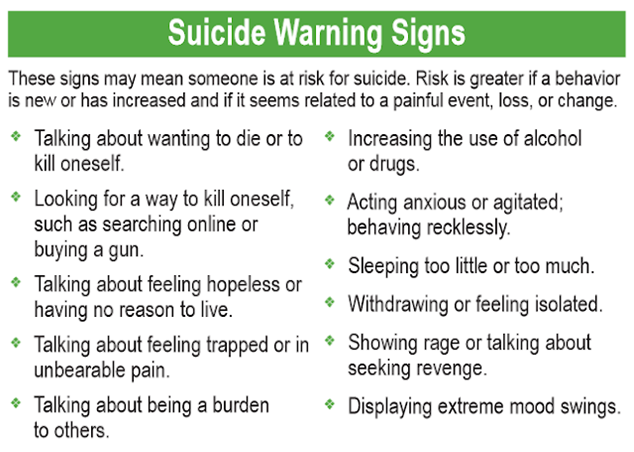
 Suicide does not have an age limit
References
Suicide Prevention Lifeline. (2019). #Bethe1to. Retrieved from https://www.bethe1to.com/
Suicide Prevention Lifeline. (2019). Suicide warning signs image. Retrieved from
https://suicidepreventionlifeline.org/
Zero Suicide in Health and Behavioral Health Care. (2019). Zero Suicide. Retrieved from
https://zerosuicide.sprc.org/
LikeLike
I think listening to teens is an important key factor in recognizing suicide ideation, intention, and plan. The suicide increase among youth is a disturbing and true sad fact, but it can be prevented by providing consistent help to our youth who need help due to impaired mental health. The awareness about risky behavior for suicide can prevent a life from death by identifying and providing help and counseling.
LikeLiked by 1 person
I really appreciate you choosing increasing child and adolescent suicide awareness as your topic. I was not aware of the change to a three-digit number for the suicide hotline, what a simple, yet impactful change. Is there also a text messaging option that perhaps the younger generation may choose as a means to ask for help? The Center for Disease Control and Prevention (CDC) has acknowledged the rise in suicides nationally (CDC, 2018). Policy options to address this may include improved access to mental health services and medication, increase peer support programs and work within communities to decrease suicide risk factors (CDC, 2018). Adverse Childhood Experiences (ACEs) has expanded beyond that of abuse, neglect, and trauma, to now also include bullying, poverty, peer rejection, poor academic performance, racism, community violence, food scarcity, and unsafe living environment (CDC, 2019). It would be interesting to see if there is a connection to these ACEs and an increase in child and adolescent suicide rates, and if so, what preventative factors are being done to combat this issue. I look forward to learning more from your blog throughout this semester.
References
Centers for Disease Control and Prevention. (2019). Adverse Childhood Experiences (ACEs). Retrieved from https://www.cdc.gov/violenceprevention/acestudy/index.html
Center for Disease Control and Prevention. (2018). Suicide Policy Brief. Retrieved from https://www.cdc.gov/ruralhealth/suicide/policybrief.html
Center for Disease Control and Prevention. (2018). Suicide Rising Across the US. Retrieved from https://www.cdc.gov/vitalsigns/suicide/index.html.
LikeLiked by 1 person
Melissa, as of now they have not completely pass the bill that will allow there to be a 3-digit number for suicide but it is in the works. I do know that there are multiple applications that texting is an available option for teens as well as CBT focused applications available for use. Adever Childhood Experiences (ACE’s) are evaluated upon admission at PCH and they have been related to the majority of our suicidal patients. As far as preventative measure that starts with the environment and the guardians upbringing. I know Dr. Denton is now doing Infant Psychiatry that tries to start when the mother is preganant through the toodler age of the child to see if it will help change the narrative around ACEs.
LikeLike
Unfortunately, the topic of suicide is becoming more main stream due to the increased numbers of awareness through social media, celebrity deaths and popular tv shows with suicide as a core component. Youth viewing their icons and in the manner he or she left this world as an option of escaping the circumstances of life is a disturbing prospect. Popular television shows “13 Reasons Why” and “A Million Little Things” center their plot around suicide as an escape from life. As much as I do enjoy watching television shows like the ones stated, I worry about children and adolescents viewing these programs. Adolescents have proven to fall victim to dangerous trending activities, such as the “Tide Pod Challenge” and “The Choking Game”, both of which have resulted in unintended deaths.
After reading a few articles relating to your topic, an alarming fact I came across was that children as young as 5 have been known to commit suicide with about 35 children under the age of 12 dying yearly from suicide. According to Youth Suicide (2018) alarming evidence illustrating trends in suicidal ideation and suicidal actions, youth hospitalized for suicidal thoughts has doubled in less than a decade. I admire you taking on such an important and sensitive subject to discuss and educate the public.
Reference
Youth Suicide. (2018). Officer.com, Officer.com, 2018.
LikeLiked by 1 person