Suicide is now the 10th leading cause of death for American, with a reported double amount of suicides in comparison with homicides in 2016 (Carey, 2018). Suicide prevention was first established in the 1950’s by a group of clinicians that wanted an understanding on suicide and suicide prevention (National Strategy for Suicide Prevention, 2012). The efforts of these clinicians expanded when the compassion and support of grassroot individual groups of those bereaved by suicide joined their efforts to bring suicide prevention to the national level. Together they were able in 2001 to create the National Strategy for Suicide Prevention.
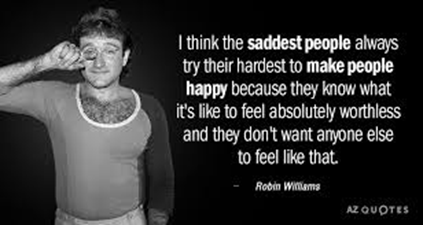
According to Carey (2018), there are more tolerant attitudes toward suicide, with it being seen in some populations as a cultural script and more acceptable. Think about social media videos you have seen with someone talking about taking their life and the increase of social groups that support suicide and self-harming that has taken off. Suicide has gone from a culture of not talking about how one’s death occurred to it being glorified and spotlighted for all to see. The influx of celebrities taking their life or playing roles where they take their lives has brought suicide into family conversations, in workplace break rooms, and in school settings. Suicide used to have a shock value to it when you heard a story of someone taking their lives especially a child, now all you hear is “not another one”, as we go on with our day.
The new Netflix series “13 Reasons Why” brought awareness to schools and parents on how this epidemic has spread amongst the youth. The unit I worked on was full to capacity and our emergency department was full of suicidal children waiting for an inpatient bed or in for an evaluation by school. Now that it is of topic it is time to build regulations and procedures around suicide prevention.
The National Strategies for Suicide Prevention (2012) mentions two important federal and state laws that impact suicide prevention. The two acts are targeted to the high- risk groups of Veterans and Youth. One being the Garrett Lee Smith Memorial Act (GLSMA) 2004 which is the critical in getting federal funding for suicide prevention. The Act is named in memory of a Senator’s son that completed suicide. The GLSMA provides grants to states, tribes, territories and educational institutions to create programs for suicide prevention. The second act is in relation to suicide prevention for Veterans. The National Strategy for Suicide Prevention (201) spoke of the Joshua Omvig Veteran Suicide Prevention Act (JOVSPA) of 2007 that lead to the Secretary of United States Department of Veteran Affairs to implement a suicide prevention program for veterans. The program includes staff education, mental health assessments as part of overall health assessments, a suicide prevention coordinator at each VA medical facility, research efforts, 24-hour mental health care, a toll-free crisis line, and outreach to and education for veterans and their families. In the year of 2009 the Department of Veteran Affairs implemented a one on one chat service that veterans can access through the internet.
Suicide Prevention Awareness is a collaboration of the community, providers, government and educational institutions. The only way that change can be felt in the decrease of suicide is if we all come together to create programs, funding, laws and awareness campaigns to get the information out to those individuals in need.
References
Carey, B. (2018). How suicide quietly morphed into a public health crisis. New York Times. Retrieved from www.nytimes.com/2018/06/08/health/suicide-spade-bordain-cdc.html
Google Image Search. (2020). Celebrity suicide awareness images. Retrieved from https://www.google.com/search?rlz=1C1CHBF_enUS797US797&sxsrf=ACYBGNTzBZtXq0vB9HGByN_GlaJIT3cgyg:1581823732600&q=celebrity+suicide+prevention+images&tbm=isch&source=univ&sa=X&ved=2ahUKEwjB5LbNkNXnAhXJpJ4KHdJeDBgQ7Al6BAgKEBk&biw=1280&bih=625&dpr=1.5#imgrc=9LLl_4-tZ8b4JM
National Strategy for Suicide Prevention. (2012). Goals and objectives for action: A report of the U.S. surgeon general and of the National Action Alliance for Suicide Prevention. Retrieved from https://www.ncbi.nlm.nih.gov/books/NBK109918/
Netflix. (2020). 13 reasons why. Retrieved from https://www.youtube.com/watch?v=3kAc_aGh7U8
 Suicide does not have an age limit